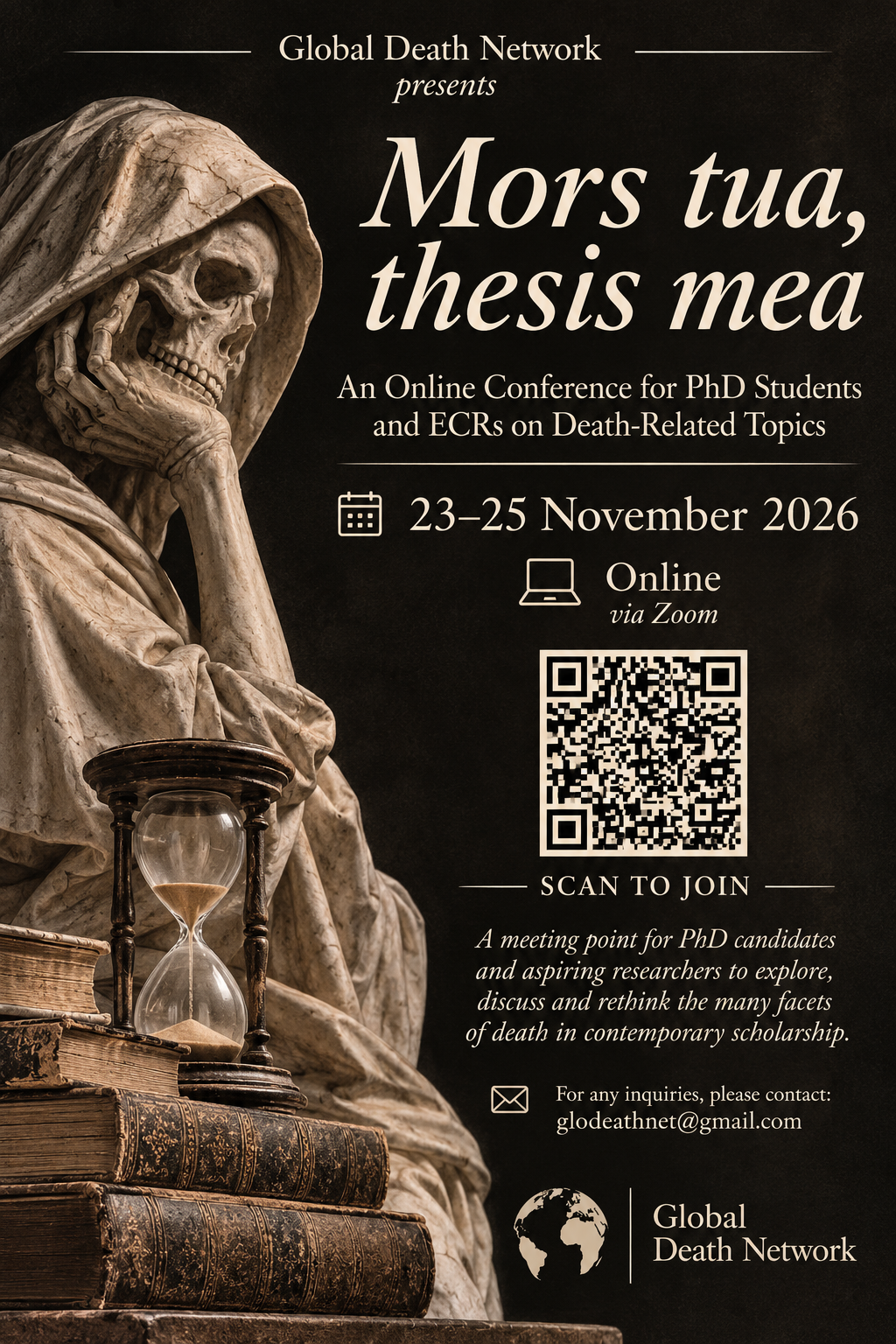
I’m delighted to be presenting at Mors tua; thesis mea, the Global Death Network’s online conference for PhD students and early-career researchers working on death-related topics (23–25 November 2026).
What my paper is about
In 1899, a British regional newspaper carried a small notice about a missing brooch with a design finely worked in hair. It reads like any other lost-property notice, until the final line heartbreakingly describes the item as being ‘valuable only to the loser on account of association’.
Victorian hairwork took many forms, from brooches, lockets and rings to bracelets, earrings, buttons and watch chains. It was designed to keep relationships present: by stirring memory, and through the belief that hair held the very essence of a person. These objects brought a tactility to mourning and memorialising, binding wearers to lovers, family and friends separated not only by death, but by distance and circumstance.
Today, thousands of these nineteenth-century relics survive, cut off from the people who made them meaningful. Drawing on Jacques Derrida’s concept of ‘hauntology’, this presentation explores hairwork as an archive of memory that still signals meaning it no longer contains, and asks what these haunting objects reveal about how we remember, and forget, the people we love.


Leave a Reply